How firm is too firm? A plain guide to mattress firmness
Firmness is the most argued-about number in mattress shopping. Here is what it describes, what it does not, and how to pick yours.
By Anneli Voss, Head of Workshop · · 5 min read
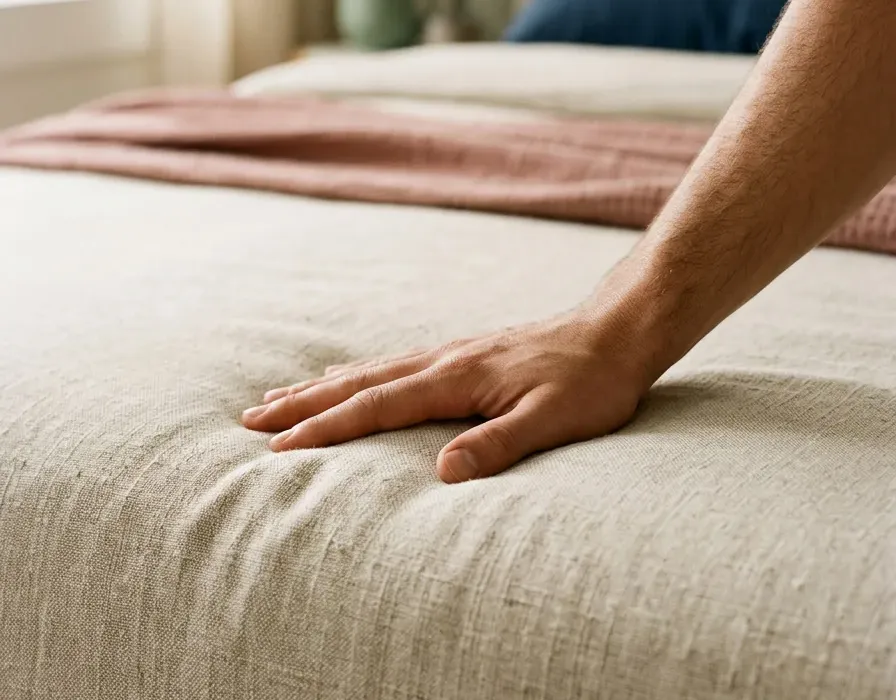
Firmness is how much a mattress pushes back when you press it. That is all. It says nothing about whether the mattress is good, whether it supports you, or whether it will still feel the same in five years. It is a feel, and feel is personal.
What firmness is not
People often say “firm for back pain”. The reality is more careful: a mattress needs to support the spine in a neutral line, and the right firmness for that depends on your weight and your position. A heavier body sinks deeper into the same mattress, so what feels medium to one person feels soft to another.
Match it to position
Side sleepers carry weight on a narrow strip: shoulder, hip, knee. They want enough give for those to sink in, and enough support that the waist does not sag. That is usually a softer to medium feel.
Back sleepers spread weight along the whole body. The risk is the hips sinking too far, so a medium-firm to firm surface keeps the spine flat.
Stomach sleepers have the same risk in the extreme: hips sink and the lower back arches. A firm surface keeps them level.
A simple test
Lie on your side and ask someone to look at your spine from behind. It should be a straight horizontal line. If your hips are lower than your shoulders, the mattress is too soft for you. If your waist is held in the air with a gap underneath, it is too firm.
That is why we offer a 100-night trial and why the quiz asks about your weight. Firmness is easier to find over a month of nights than in a minute on a showroom bed.